Tick activity across Ward County peaks during two distinct windows: spring emergence between late April and June, followed by a secondary adult surge in September. In river-adjacent sectors like Oak Park and Eastwood…
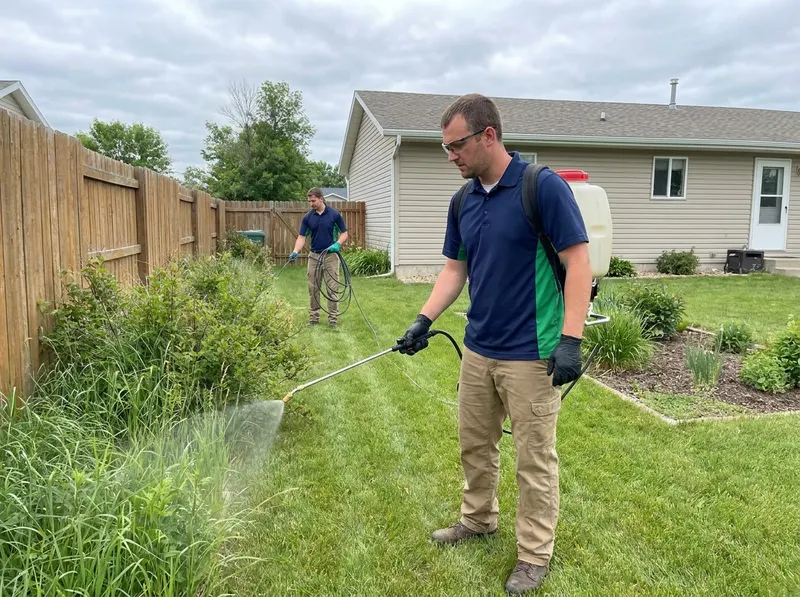
Tick activity across Ward County peaks during two distinct windows: spring emergence between late April and June, followed by a secondary adult surge in September. In river-adjacent sectors like Oak Park and Eastwood Park, moisture from the Souris River Basin combines with dense cottonwood leaf litter, creating prime microclimates for the blacklegged deer tick. Meanwhile, wind-swept residential zones along North Hill, Bel Air, and the rural parcels toward Nedrose experience high pressure from American dog ticks carried off native prairie acreage and shelterbelts. A perimeter yard barrier treats the transitional transition lines where mowed turf abuts heavy cover, neutralizing ticks where they seek moisture rather than blanket-spraying open, sun-baked grass where ticks cannot survive desiccation.
The service applies an EPA-registered micro-encapsulated pyrethroid or granular active ingredient to the lower 3 feet of brush, woodlot peripheries, and ground mulch within 10 to 20 feet of active turf boundaries. This creates a lethal contact boundary for questing ticks clinging to grass stems. Property owners choosing between a one-time barrier and an ongoing program face an environmental trade-off: a single mid-summer application knocks down active adult populations for roughly 30 to 45 days, but misses the emergence of spring nymphs or fall adults migrating from wildlife hosts. A two- or three-stage seasonal barrier accounts for the North Dakota freeze-thaw cycle, applying treatments as soon as ground thaw occurs and maintaining control through the first persistent hard freeze.
Property preparation requires mowing tall perimeter grass 24 to 48 hours prior to service to maximize chemical contact with lower vegetation stalks. Family members and domestic pets must stay off treated vegetation until the liquid barrier dries completely, which takes approximately 60 to 90 minutes in typical low-humidity North Dakota summer conditions. Properties backing up directly to coulees, railroad easements near Green Acres, or agricultural fields near Perkett and Terracina benefit from expanded 20-foot perimeter buffer applications to counter increased wildlife traffic from white-tailed deer and small prairie rodents.
Every job gets a firm, written price after a free on-site visit.
Tell us about your tick yard barrier application job in Minot and we'll send a clear, written quote, usually the same day.
 Nexvora Pest Control