Property owners seeking a reliable pest control service in Minot encounter severe environmental shifts between dry sub-zero winters and humid river-basin summers. When searching for effective extermination near me, structural protection requires specific barriers designed for deep frost lines, heavy insulation, and sudden seasonal migrations.

Pest Control Service in Minot is a professional structural extermination and seasonal barrier management service that eliminates localized insect infestations and excludes cold-weather rodents from Ward County properties.
Every service reflects the same meticulous attention to detail, whether it's a single job or a larger pest control service project across Minot.
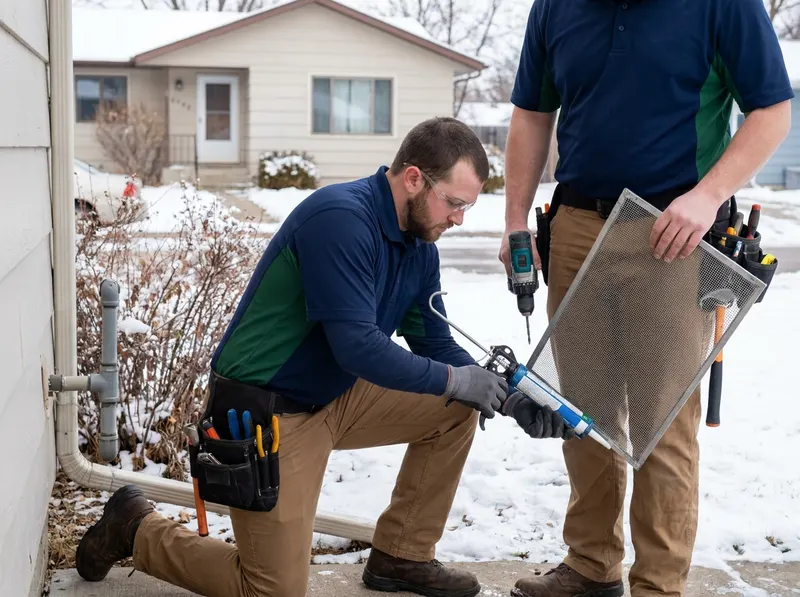
Indoor trapping setups and structural exclusion seal utility entries, foundation cracks, and rim joists against house mice and Norway rats seeking heated sub-flooring during harsh freeze-ups. Technicians inspect the full foundation perimeter, garage door astragals, dryer exhaust flues, and air conditioner line sets, installing quarter-inch galvanized hardware cloth, copper wire mesh, and industrial elastomeric adhesives rated to minus forty degrees Fahrenheit. Interior trapping protocols deploy mechanical snap-trap arrays placed along structural perimeter runs, finished basement drop ceilings, and insulated attic crawlways, avoiding broadcast poison baits inside living quarters to eliminate carcass odor behind drywall.
Get a quote →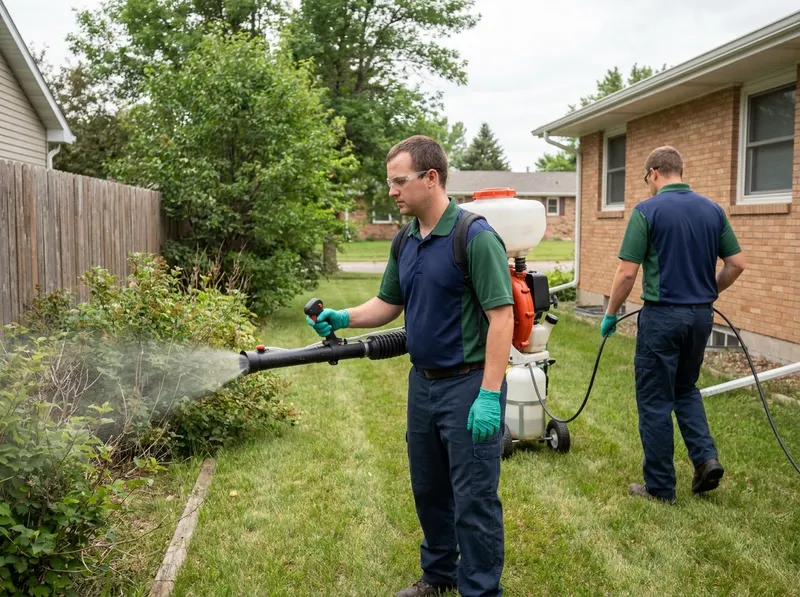
Targeted misting along shaded brush lines, low-lying drainage contours, and yard boundaries suppresses adult biting mosquitoes throughout the warm months in river-adjacent zones. Technicians utilize gas-powered backpack mist blowers to apply microencapsulated residual formulations directly to the undersides of broadleaf deciduous foliage, evergreen hedges, beneath deck timbers, and along drainage swales where mosquitoes rest during peak daylight hours. Applications focus heavily on moisture-retention zones near the Souris River floodplain and property perimeters bordering unmanaged tall prairie grass, delivering four to six weeks of residual protection per service visit.
Get a quote →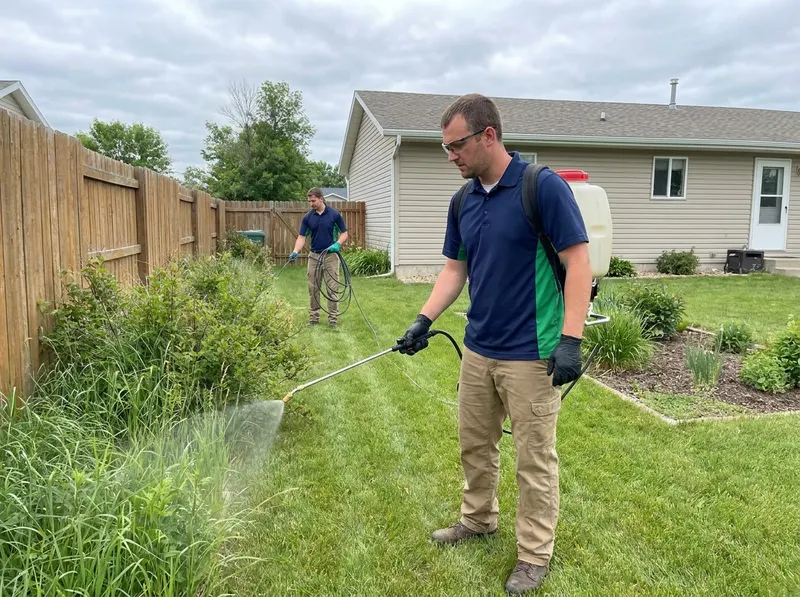
Granular and liquid perimeter treatments manage deer ticks and American dog ticks along tall grass transitions, wooded lot boundaries, and rural property perimeters. Service technicians establish a five-foot to ten-foot defensive perimeter between manicured lawn turf and dense woodlots or prairie pastures using specialized water-activated pyrethroid granules combined with precision liquid perimeter sprays. These applications interrupt the multi-stage developmental cycle of questing nymph and adult ticks, protecting domestic pets and residents from tick-borne pathogenetic vectors throughout Ward County between April and late October.
Get a quote →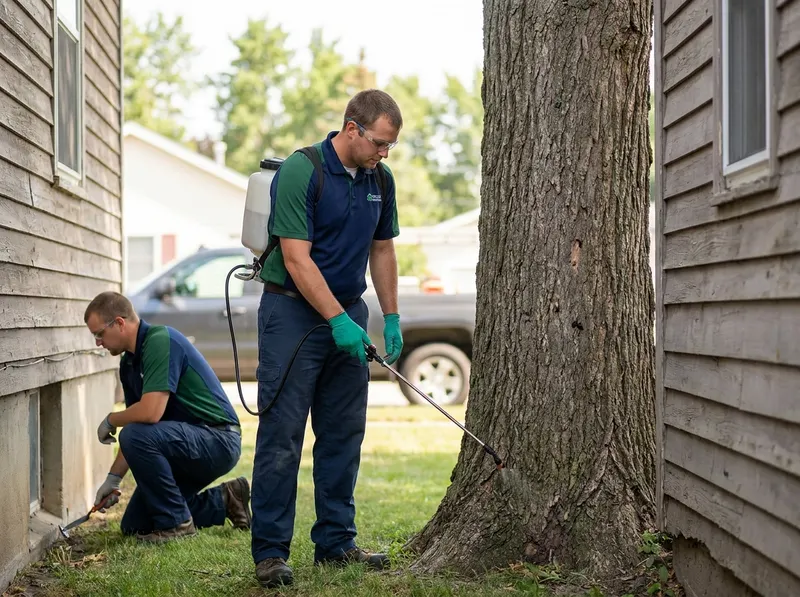
Late summer and spring exterior applications treat southern and western architectural exposures to stop congregating overwintering beetles before they penetrate exterior wall voids. Utilizing power spraying rigs capable of reaching multi-story exterior eaves, treatments deposit microencapsulated synthetic pyrethroids along sunny soffit runs, window casings, fascia boards, and siding lap joints. Intercepting these sun-seeking insects during their late-August swarming phase prevents them from slipping beneath vinyl siding and into wall insulation where they remain dormant until false warm spells pull them inside interior living spaces.
Get a quote →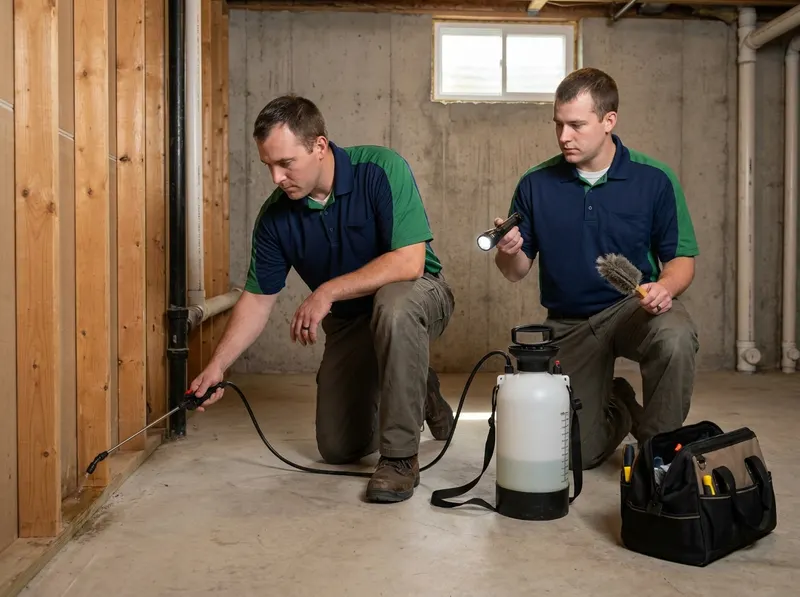
Residual microencapsulated surface applications along foundation footings, unfinished crawlspaces, and basement daylight window wells control localized funnel-web and wolf spider populations. Technicians sweep exterior eaves and window casings with extendable cobweb dusters treated with repellent dusts, followed by low-pressure barrier sprays applied two feet up the foundation wall and three feet out along the soil perimeter. Inside finished or unfinished basements, low-profile sticky monitoring boards and targeted crack-and-crevice treatments around rim joists, floor drains, and sump pit covers eliminate web-building and ground-hunting arachnids.
Get a quote →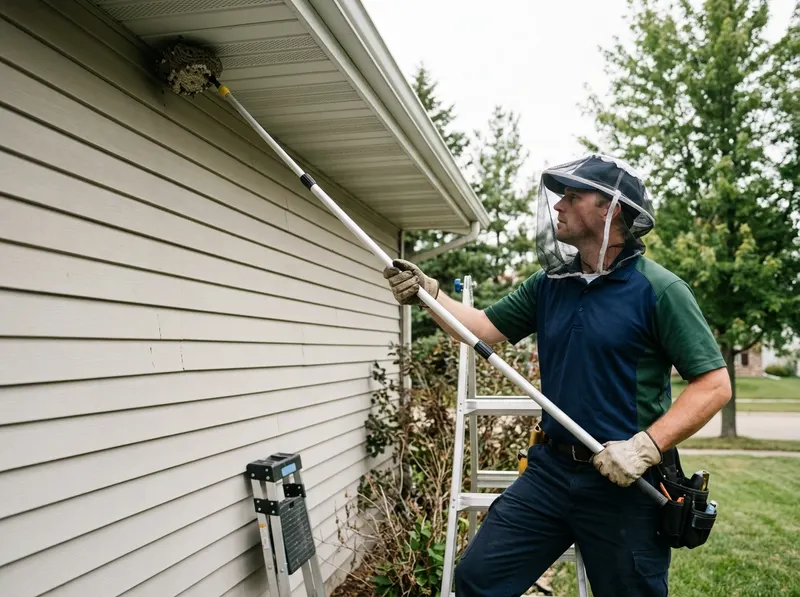
Physical nest removal combined with localized aerosol knockdown eradicates aerial paper nests, subterranean yellowjacket colonies, and structural soffit colonies safely. Technicians utilize protective bee suits, long-range aerosol injection poles, and fast-acting non-conductive freezing agents to neutralize defensive stinging insects without driving them into home attics or living areas. Once activity ceases, the complete physical structure of the nest is scraped away and the contact point treated with residual repellent concentrates to prevent secondary queen insects from re-establishing nests on the same architectural bracket.
Get a quote →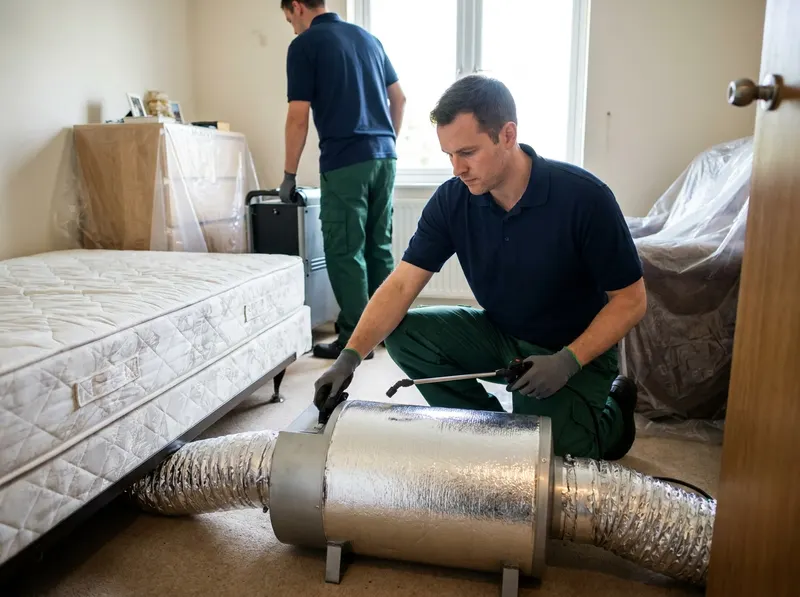
Targeted multi-stage chemical and localized steam treatments eliminate adult bed bugs and egg clusters from mattress seams, baseboards, and interior wall plates. Remediation begins with a comprehensive flashlight inspection of mattress tufts, bed frame screw holes, headboard backing, nightstand drawer tracks, and carpet tack strips. Treatment protocols integrate high-temperature dry steam applied at 180 degrees Fahrenheit to instantly kill heat-sensitive eggs, followed by residual insect growth regulators and targeted desiccant dust injected directly into electrical wall receptacles and baseboard channels for long-term eradication.
Get a quote →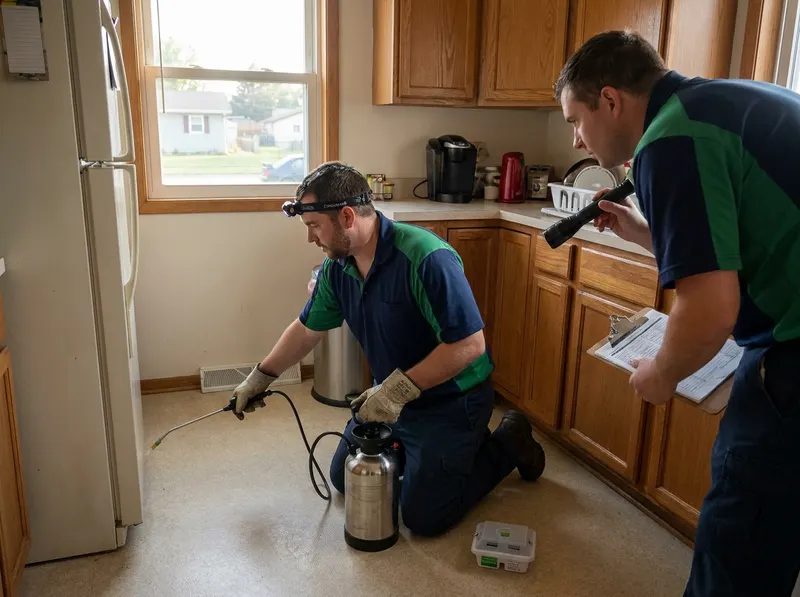
Precision insect growth regulator placements and bait matrix applications systematically eradicate German and oriental cockroach colonies from plumbing utility runs and kitchens. Technicians inspect behind commercial and residential dishwashers, beneath refrigeration condenser coils, and inside sub-sink vanity wall cavities where humidity and warmth concentrate. Non-repellent baits are applied in miniature spot placements along cabinet hinge knuckles and plumbing pipe collars, paired with point-source insect growth regulator discs that disrupt hormonal molting and render reproductive adults completely sterile.
Get a quote →You get a firm, itemized quote for your pest control service before any work begins, no surprises, no pressure.
Careful prep, tidy work, and a full cleanup when we are done. We treat your home and belongings like our own.
The same trusted, background-checked team from the first call to the final check.
Selecting a management strategy depends on the pest species, structural entry history, and surrounding topography. If an infestation involves mice or brown rats gnawing into fiberglass insulation during October freeze-ups, structural rodent exclusion combined with interior mechanical trapping is required; if the concern involves nuisance boxelder bugs, field ants, or spiders clustering around vinyl siding in April, an exterior perimeter barrier application is appropriate. The operational trade-off centers on upfront materials versus long-term frequency: mechanical exclusion demands higher initial investment in heavy-gauge hardware cloth and foundation masonry repairs but reduces annual chemical applications, whereas recurring barrier sprays require ongoing quarterly exterior treatments to defend properties against river-valley humidity and windborne migrations without altering building architecture.
When property owners compare one-time corrective cleanouts against recurring preventive perimeter programs, the primary consideration is structural vulnerability. Homes with fieldstone foundations, older stone mortar, or exposed crawlspaces along South Hill or near the Souris River Basin experience recurrent pressure every spring thaw and autumn freeze, making quarterly monitoring arrays and exterior repellant reapplications more cost-effective over a three-year span. Conversely, modern monolithic slab-on-grade builds in newer subdivisions like Terracina often require only targeted seasonal exterior band applications in late May and early September, provided utility penetrations through rim joists remain tightly caulked with expandable polyurethane foam and copper mesh backing.
Choosing a localized extermination plan rather than a standardized regional program prevents chemical over-application on dry, windblown prairie soils while focusing treatments on structural transition zones where pests actually penetrate exterior envelopes.
Every project gets a firm, written price after a free on-site visit. Ranges below for orientation.
Tell us about your pest control service job and we'll send a clear, written quote, usually the same day. Or just call and talk to a real Minot pro.
(701) 779-8058
Properties situated throughout Minot face distinct localized pest pressures dictated by the elevation changes of the Souris River Basin. Dense tree cover, high water tables, and low elevation near Oak Park, Eastwood Park, and the Roosevelt Park Zoo cultivate elevated mosquito breeding habitats and persistent tick migrations through late summer. Up on North Hill, South Hill, and Bel Air, exposed sub-zero winter winds drive deer mice, field mice, and overwintering boxelder bugs into attic ridge vents and foundation sill plates, requiring cold-tested elastomeric sealants that do not crack under severe winter conditions. Structures bordering the North Dakota State Fairgrounds and the Minot State University campus frequently experience intense seasonal outdoor rodent pressure when agricultural exhibits vacate and student rental turnovers expose food debris. The geological soil profile of Ward County, composed largely of heavy glacial till and alluvial silts, creates substantial structural expansion and contraction during seasonal freeze-thaw cycles. This ongoing soil movement causes microscopic stress cracks in poured concrete foundations and masonry mortar joints along Perkett and Green Acres, opening entry pathways as narrow as one-quarter of an inch that foraging rodents exploit during the first hard frost in late September or early October. In low-lying river areas, annual spring runoff along the Souris River saturated soils force subterranean field ants and ground-nesting spiders upward out of riverbanks and straight into residential basements and slab foundations. Exterior pest barrier applications along the river valley require specialized insoluble microencapsulated formulations designed to adhere to damp surfaces without washing away during heavy spring rains, providing consistent perimeter defense when environmental pressures peak.
Free estimates for Minot & the surrounding area.
 Nexvora Pest Control